
What's all the buzzword talk surrounding LLMs (Large Language Models), Machine Learning, and Artificial Intelligence? This article will explain and elaborate on the popularity of these concepts and how your everyday life is impacted.
What is Machine Learning?
Machine learning (ML) is a set of methods that allows computers to recognize and learn patterns in data to make predictions or decisions. The concepts of using different models, such as Transformer models, Large Language Models, and other conventional models, to determine how the data is processed, transformed, and read by the algorithm being used.
Real-World Application: AI in Graphics Processing
Transformer Models in Action
The Transformer Model, utilized in technologies like NVIDIA's DLSS (Deep Learning Super Sampling) 4 and AMD's FidelityFX Super Resolution 4, represents a breakthrough in real-time graphics enhancement. These advanced technologies and algorithms are integrated into modern graphics cards to deliver unprecedented performance improvements.
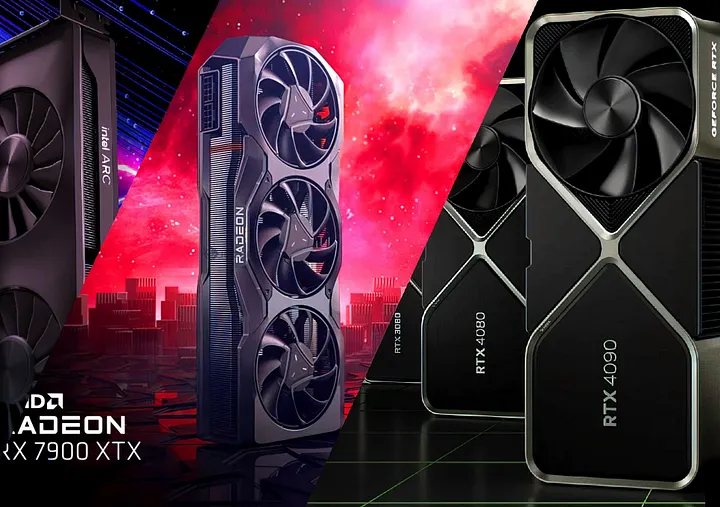
These sophisticated systems and algorithms work by creating artificially generated frames between non-generated frames, resulting in a significantly smoother in game experience. The technology leverages neural networks trained on millions of frames to predict and generate frames with great accuracy.
Frame Generation
AI creates intermediate frames to boost frame rates without requiring additional rendering power.
Fluid Motion
Advanced interpolation techniques ensure smooth transitions and natural-looking motion.
Neural Networks
Deep learning models trained on massive datasets enable real-time processing.
Hardware Acceleration
Dedicated tensor cores on GPUs optimize AI workload performance.
While the transformer models significantly impact performance, the true magic lies in the synergy between advanced algorithms and powerful GPU hardware. Modern graphics cards feature specialized AI processing units (tensor cores) that handle these complex calculations with incredible efficiency. Without needing to know much about graphics cards, the important specifications include the amount of Tensor cores, VRAM (Video RAM), Memory Bandwidth, system RAM, and Architecture provided per generation of releases. To consider other essential parts to a computer, such as the total amount of system storage, CPU, motherboard, and power supply units are important. For this explanation, the main point of interest is the graphics card. The more VRAM, Tensor cores, System RAM, and memory bandwidth bundled with the latest graphics card architecture will provide the best experience when interfacing with Machine Learning algorithms.
What are Large Language Models?
Large Language Models are a subcategory of a Machine Learning algorithm used to complete tasks based on text analysis, translation, and answering questions. The most commonly known Large Language models include OpenAI's ChatGPT, Perplexity's Perplexity AI, Anthropic's Claude AI, xAI's Grok, and many more. What these language models have in common is the input or data required to run the model and to have a specific task completed by the algorithm.

Practical Use Cases of LLMs
Large Language Models (LLMs) have advanced artificial intelligence and its applications across multiple industries. Their integration into systems such as Apple Intelligence, Android Intelligence, Google Assistant, and Amazon's Alexa has improved information processing and interactions with users. The practicality of these applications using Large Language models lies in their ability to comprehend, generate, and summarize natural language effectively. For instance, Apple Intelligence can condense emails or text messages, enabling the reader to quickly extract key information without reading the entire message or email.
The Future of AI-Driven Technology
As we continue to explore the capabilities of machine learning and artificial intelligence, we're witnessing exponential advancements across all sectors of technology. From real time graphics enhancement to natural language processing, these technologies are fundamentally changing how we interact with computers and digital content.
In upcoming articles, I will dive deeper into how I broke into tech and the specific aspects of machine learning, explore various model architectures, and examine how these technologies are being applied across different industries. Stay tuned for more in depth technical discussions and practical applications.